Softsquatting
Investigates how buildings planned for demolition can be gently occupied - using architectural tools, artistic practice and spatial experiments to explore temporary use and the potetial of spaces in transition.
Investigates how buildings planned for demolition can be gently occupied - using architectural tools, artistic practice and spatial experiments to explore temporary use and the potetial of spaces in transition.
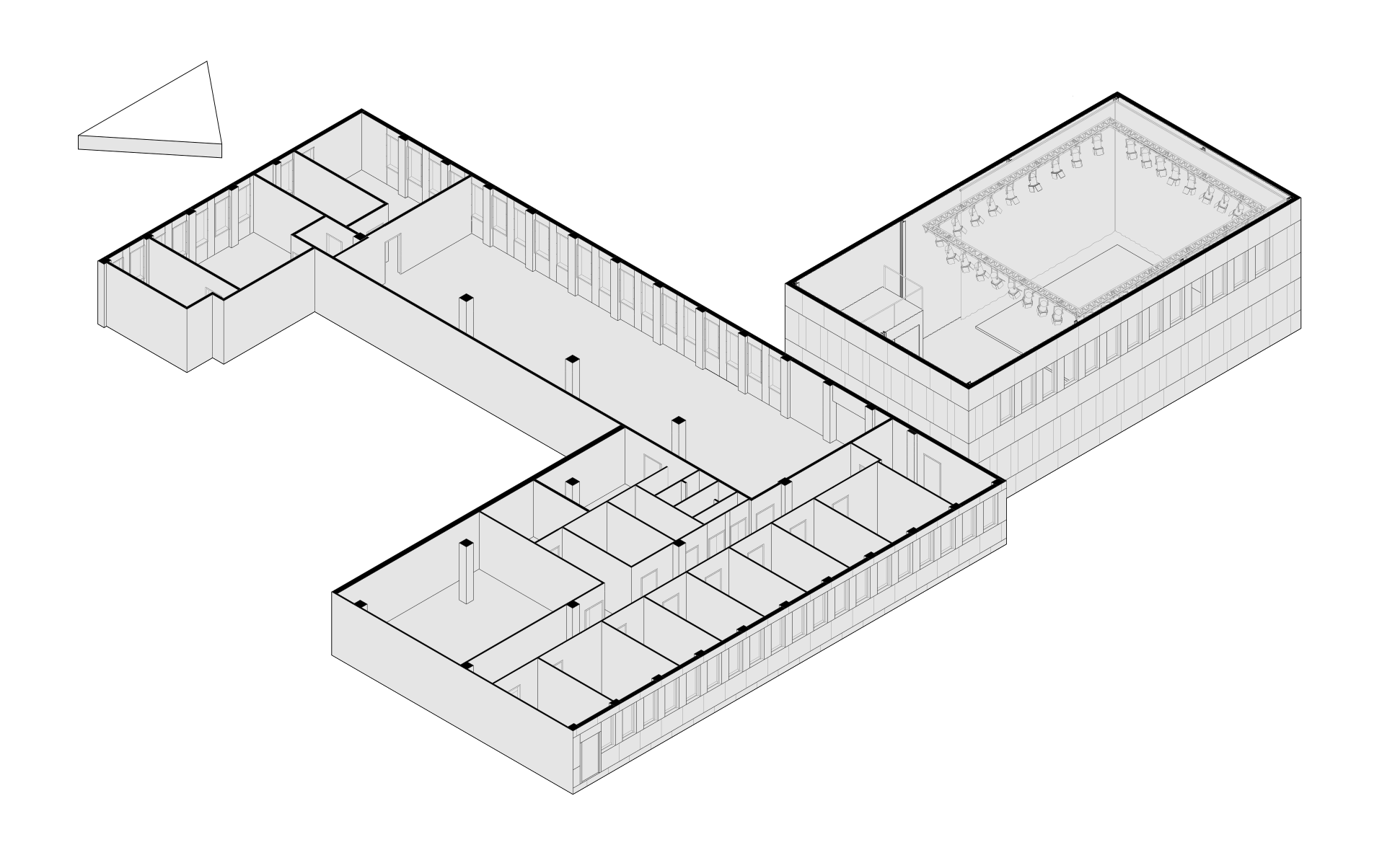
What Remains centers on the association Fylkingen’s premises in a demolition-threatened building in Bredäng, Stockholm.
Founded in 1933, Fylkingen is an artist-run, non-profit association for experimental music and art, and is thus one of the world’s oldest forums of its kind. Today, the association consists of more than 100 active members who develop and present new works in electroacoustic and other forms of experimental music, dance, film, video, performance art, and installations (Fylkingen, 2026).
Fylkingen’s artistic practice serves as a key point of departure for the project’s poetic articulation of the building.
The project is conceived as a farewell to Fylkingen’s activities in the building and is presented as a film shot through its premises, demonstrating how site-specific choreographies interact with architecture through movement, space, and direction over time.
What remains when a building is demolished?
How do we allow a building to exist beyond paper?
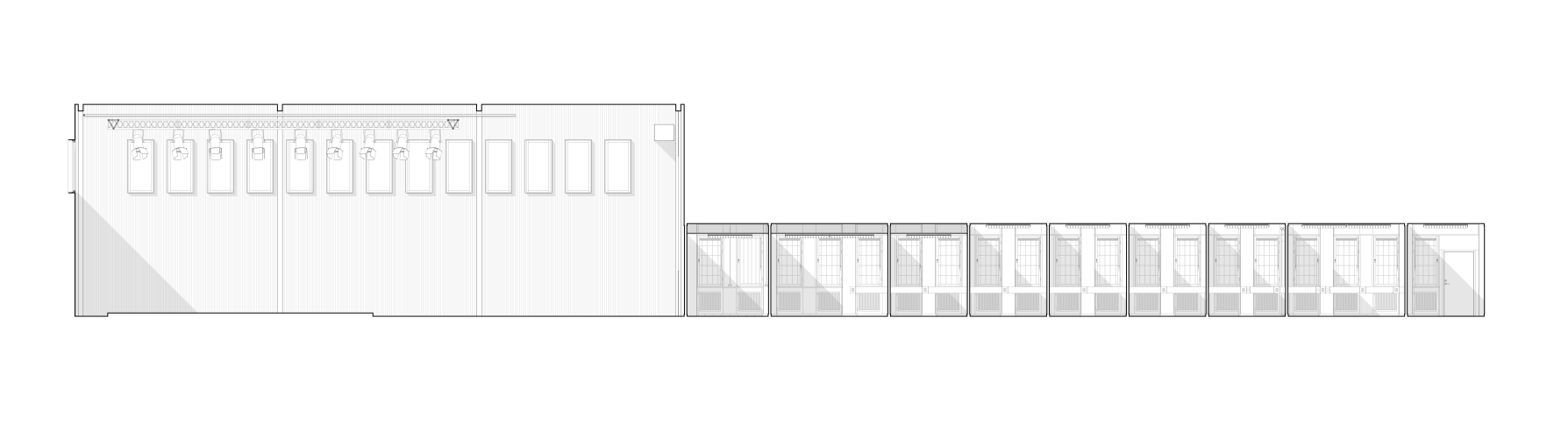
Building permit documents reflect the ideals of their time, technical solutions, and regulations, yet they remain a limited account - without traces of wear over time and without the presence of things. The drawings establish conditions for movement and sound, but lack dance and music.
In 1973, Canon’s new headquarters is completed in the Stockholm suburb of Bredäng. That same year, the artist-run association Fylkingen marks its 40th anniversary. Half a century later, in 2023, the Canon building is threatened with demolition. Once a symbol of technical expertise, success, and expansion, the building becomes Fylkingen’s temporary refuge after the association is evicted from its premises in central Stockholm at short notice.
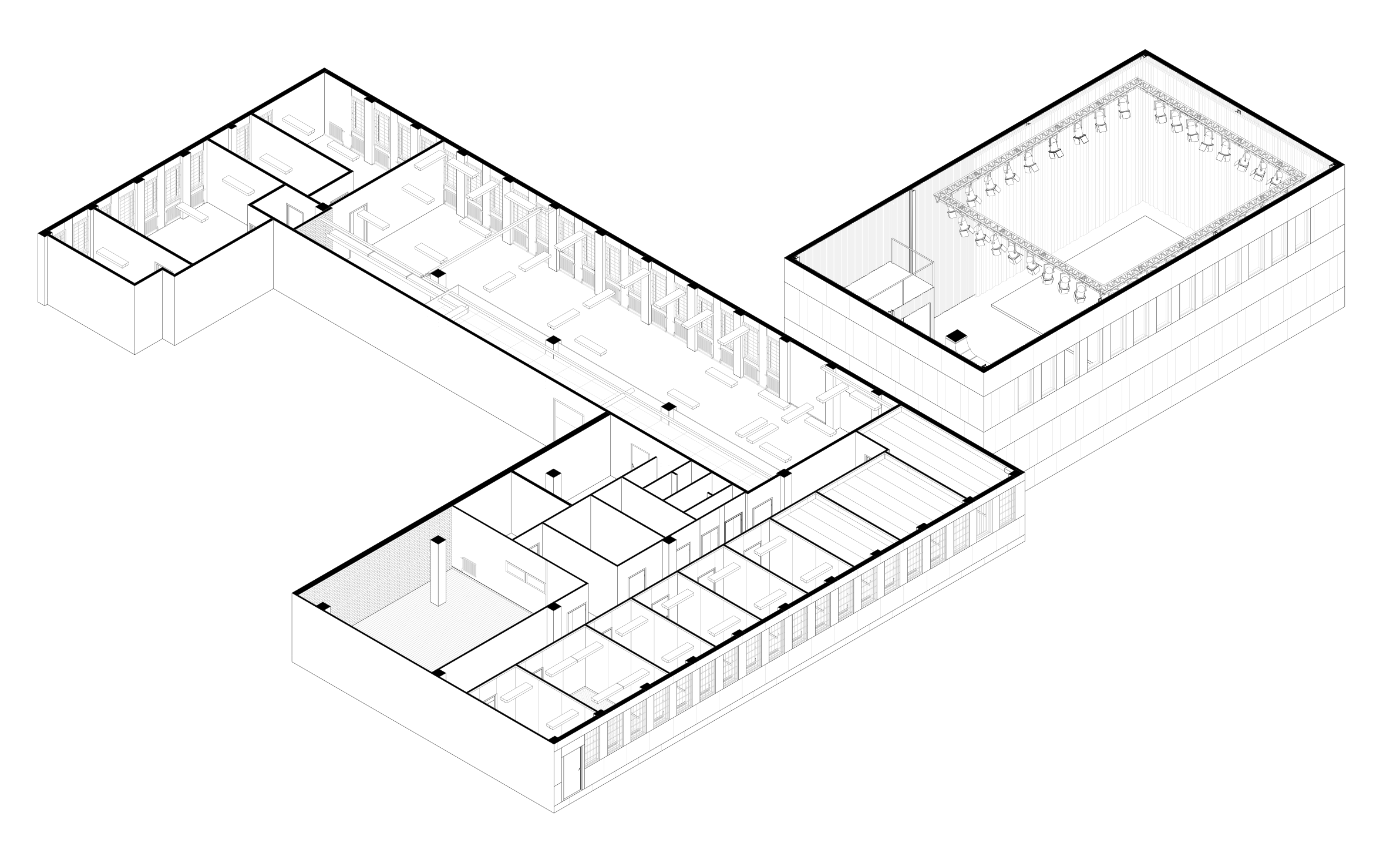
When choreographer Margaretha Åsberg is interviewed by Dagens Nyheter in 1986, she describes space as a dynamic mass rather than a void - one to which we ourselves give movement and form (Vinterhed 1988, p.18), and reminds us of a building’s inherent energy, awakened by those who act within it.
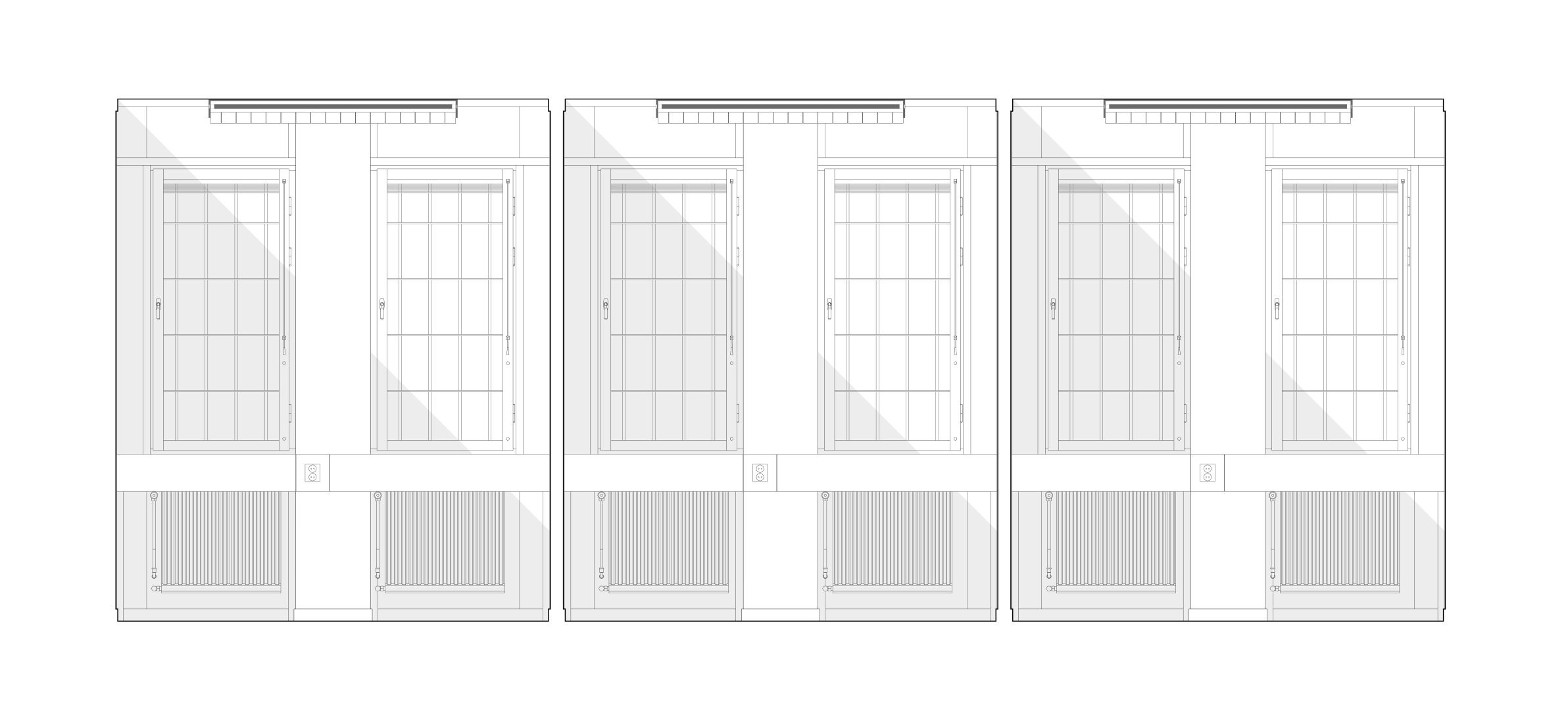
Ribbon windows
Infill panels
Exposed concrete floor
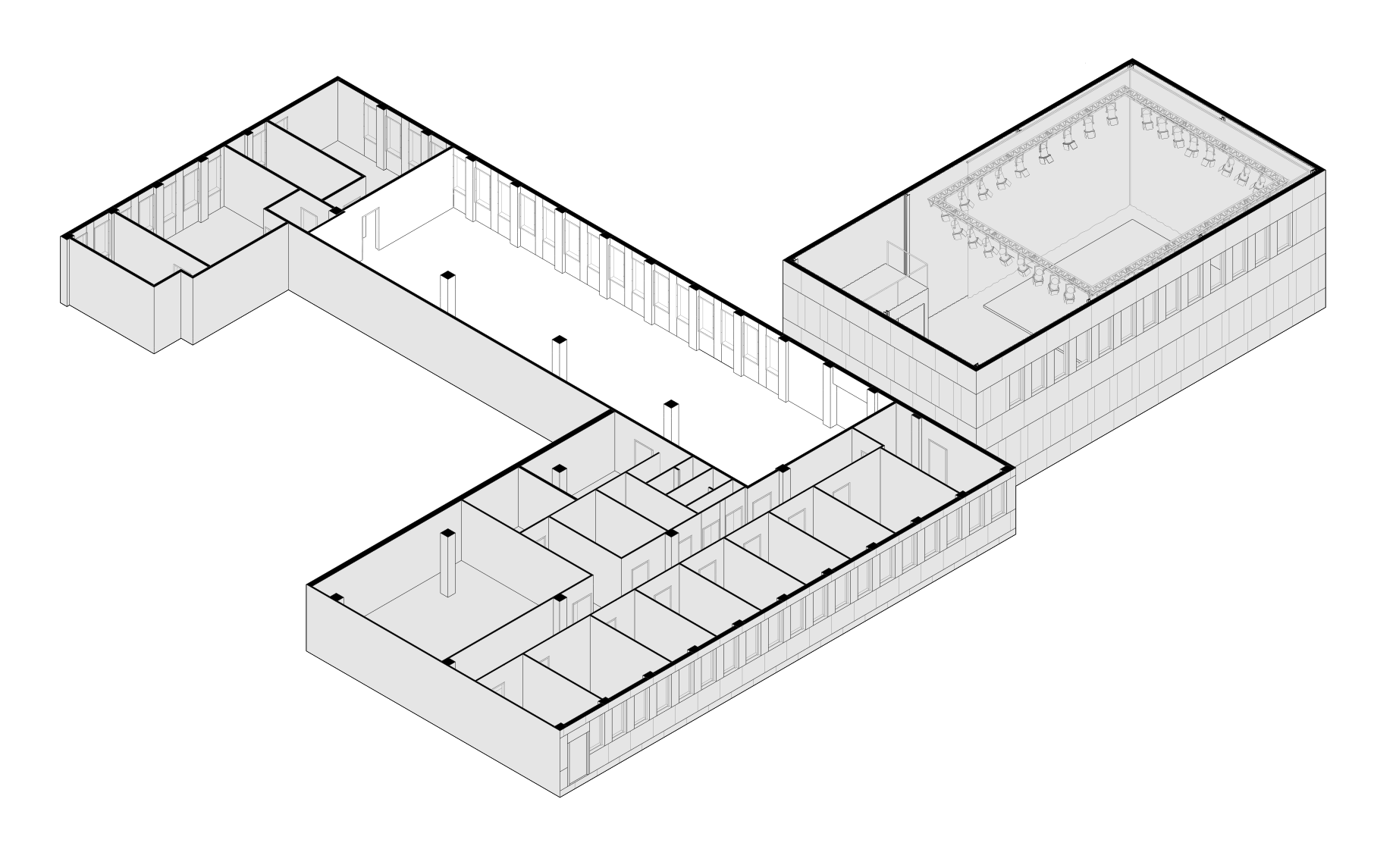
“At a time when control over urban space has been handed over to speculative interests" (Källèn 2022, p 4), as Fylkingen’s current chair Malte Dahlberg puts it, the Canon building’s almost intact 1970s architecture opens its doors to the displaced musical association. With a loud car repair shop as its nearest neighbour, Fylkingen is given free rein to operate in a nearby suburb not yet gentrified - in a Stockholm where fewer and fewer live venues are permitted to sound.

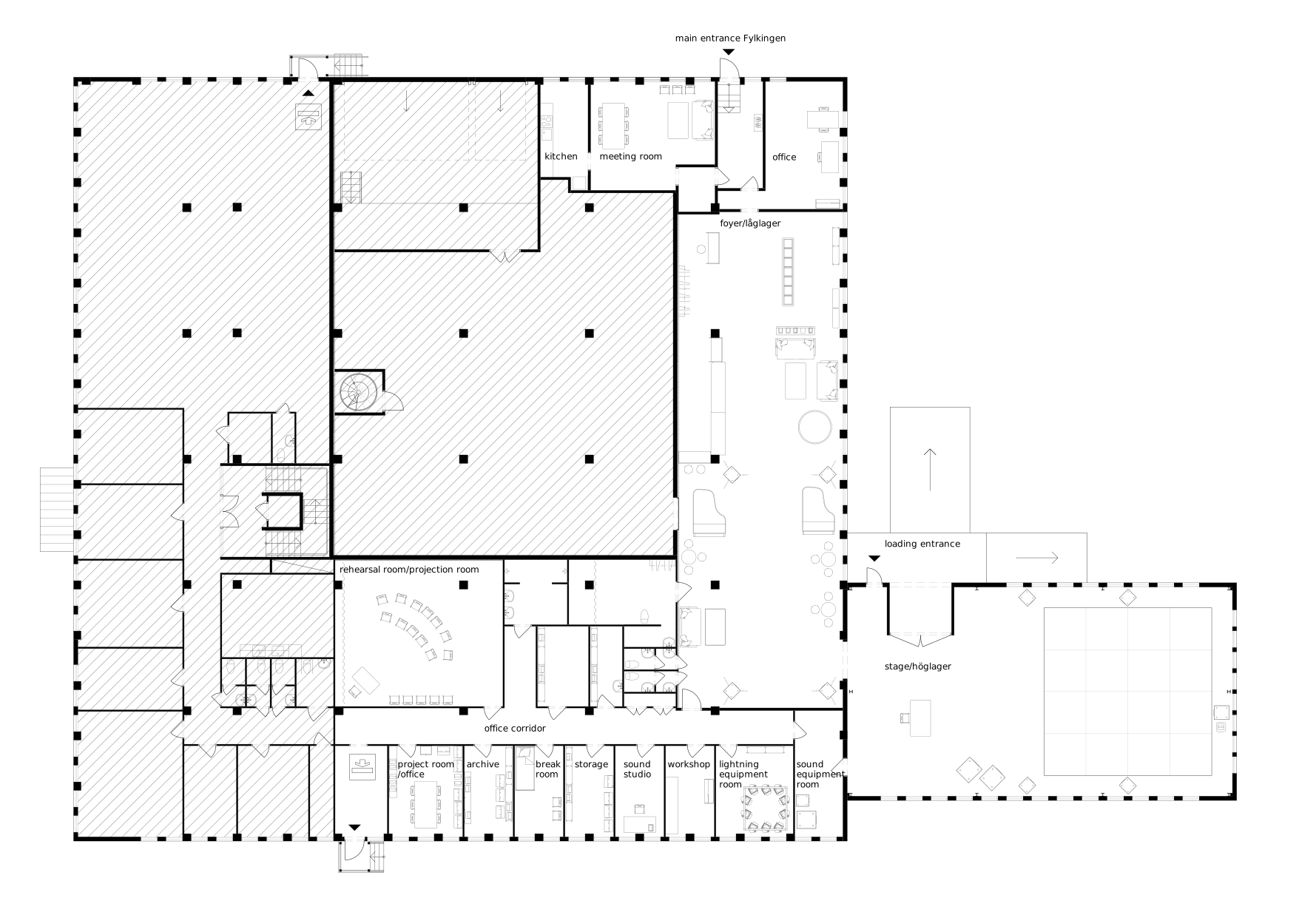
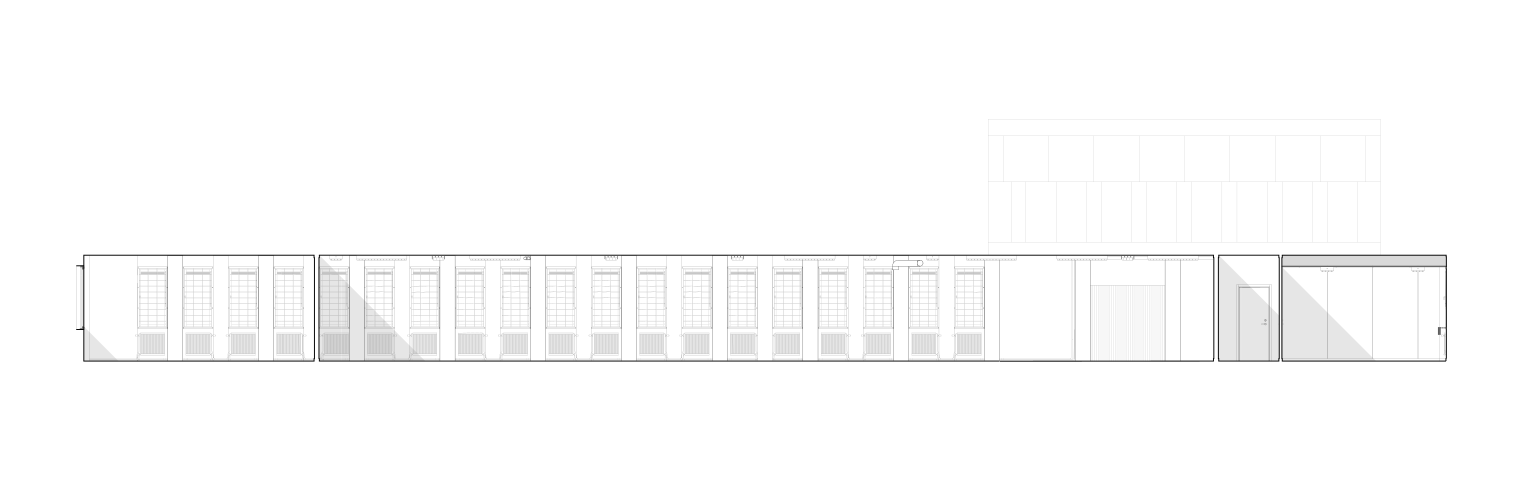
The building’s structural grid becomes visible in "låglagret", the space that first meets Fylkingen’s visitors. Behind a fireproof door, a 1970s office corridor unfolds. At one end, the original "höglagret" with its HEA beams that enable Fylkingen’s temporary black box; at the other, Canon’s projection room, with a wall of decorative mexitegel brick laid in a half-bond pattern, in a tonal match with the room’s wall-to-wall carpeting.
Prefabricated gypsum partition
V-joint panel system
Lacquered parquet flooring
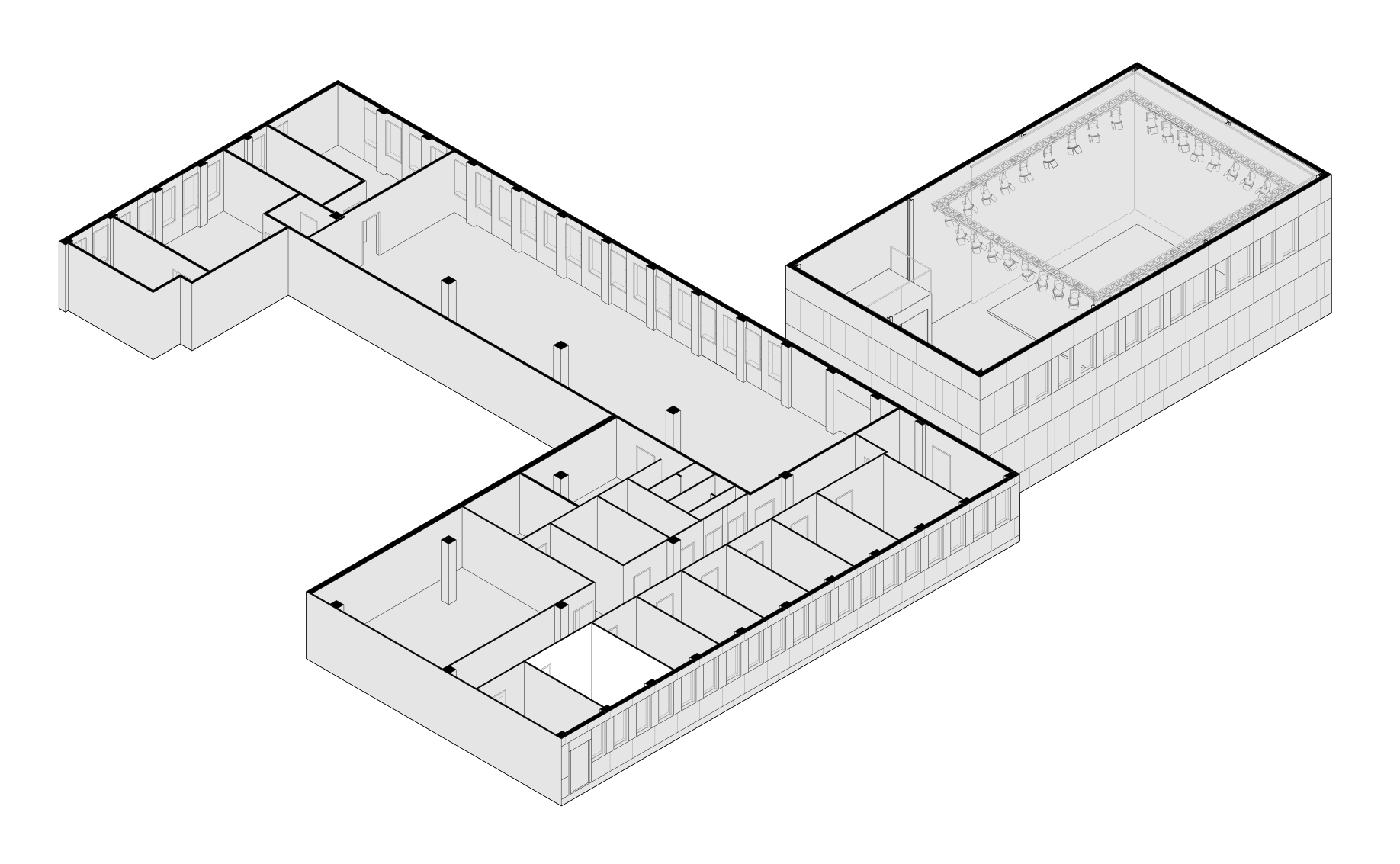
In between are the cell-like office rooms, with thin partition walls still standing in their original positions. Here, time seems to have stood still.
Wall-to-wall carpet
Mexi-type brick veneer wall
Reinforced concrete column

This is not the first time Fylkingen moves or shifts location. “Seemingly somewhere between ´institution´ and an ´speakeasy´- it has been called both by outsiders (but is neither) Between careerism and DIY punk attitude” (Bergmark 2014, p. 126).
“Like a spider in the cobweb, Fylkingen exists within Stockholm’s cultural life. The threads stretch across different projects and people, and even if one does not always sense or see it, Fylkingen is there somewhere in the background - as a kind of hotbed”
(Eriksson 2014, p. 56).
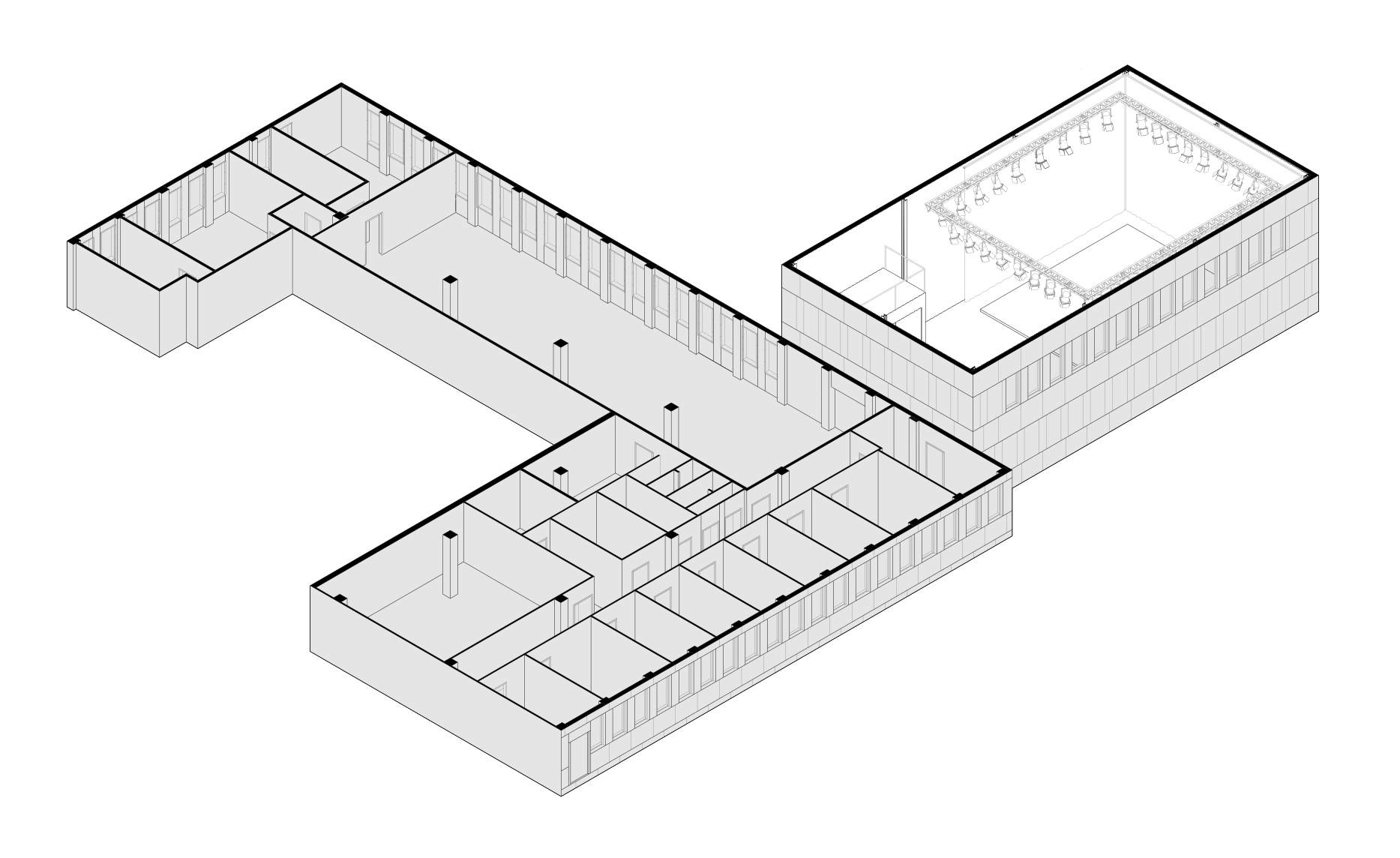
Black textile lining
HEA beam
Trapezoidal sheet metal cladding
“Fylkingen is in constant, rapid motion; therefore, there is a tendency, or a risk, of poor memory,” Susanne Skog writes in the book Fylkingen 80! (Skog 2014, p. 7), When the association turns 80. In the summer of 2026, it is time to move again.
Perhaps this is where the desire arises for documentation of Fylkingen, in this place - in its current premises in Bredäng.
And thus the question of what remains is raised, not only for the building, but also for the movement within it.
WHAT REMAINS?
Arkdes
Kungliga Biblioteket
Scenkonstmuseet
Stockholms Stadsarkiv
Källén, M. (2026). Kan storstaden leva utan att få låta? Dagens Nyheter. 19 december, p. 4.
Vinterhed, K. (1986). Konsten föder kampen. Dagens Nyheter. 22 januari, p. 18.
Bergmark, J. (2014). Fylkingen varur vari varthän?. In: Skog, S. (red.) Fylkingen 80!. Fylkingen Förlag, p. 126.
Bock, C., Doukkali, J., Hultberg, T. & Nilsson, T. (1994). Fylkingen: ny musik och intermediakonst. Fylkingen Förlag.
Eriksson, K. (2014). Massor av möten. In: Skog, S. (red.) Fylkingen 80!. Fylkingen Förlag, p. 56.Susanne Skog. (2015) Fylkingen 80! Ny musik & Intermediakonst. Fylkingen.
Pettersson Öberg, M. & Steby Stenfalk, M. (2023). Model Archive: a witness to the city. Arvinius + Orfeus Publishing.
Polanska, D.V. & Wåg, M. (2019). Ockuperat! Svenska husockupationer från 1968 till 2018. Verbal Förlag.
Sigurdson, O. (2023). Atmosfärer. En introduktion. Original Tryckeri.
Skog, S. (2014). Förord. In: Skog, S. (red.) Fylkingen 80!. Fylkingen Förlag, p. 7.
Mulvey, L. (1996). Cinematic Space: Desiring and Deciphering. In: Ruedi, K., Wigglesworth, S. & McCorquodale, D. (red.). Desiring Practices. Black Dog Publishing Limited, pp. 206-215.